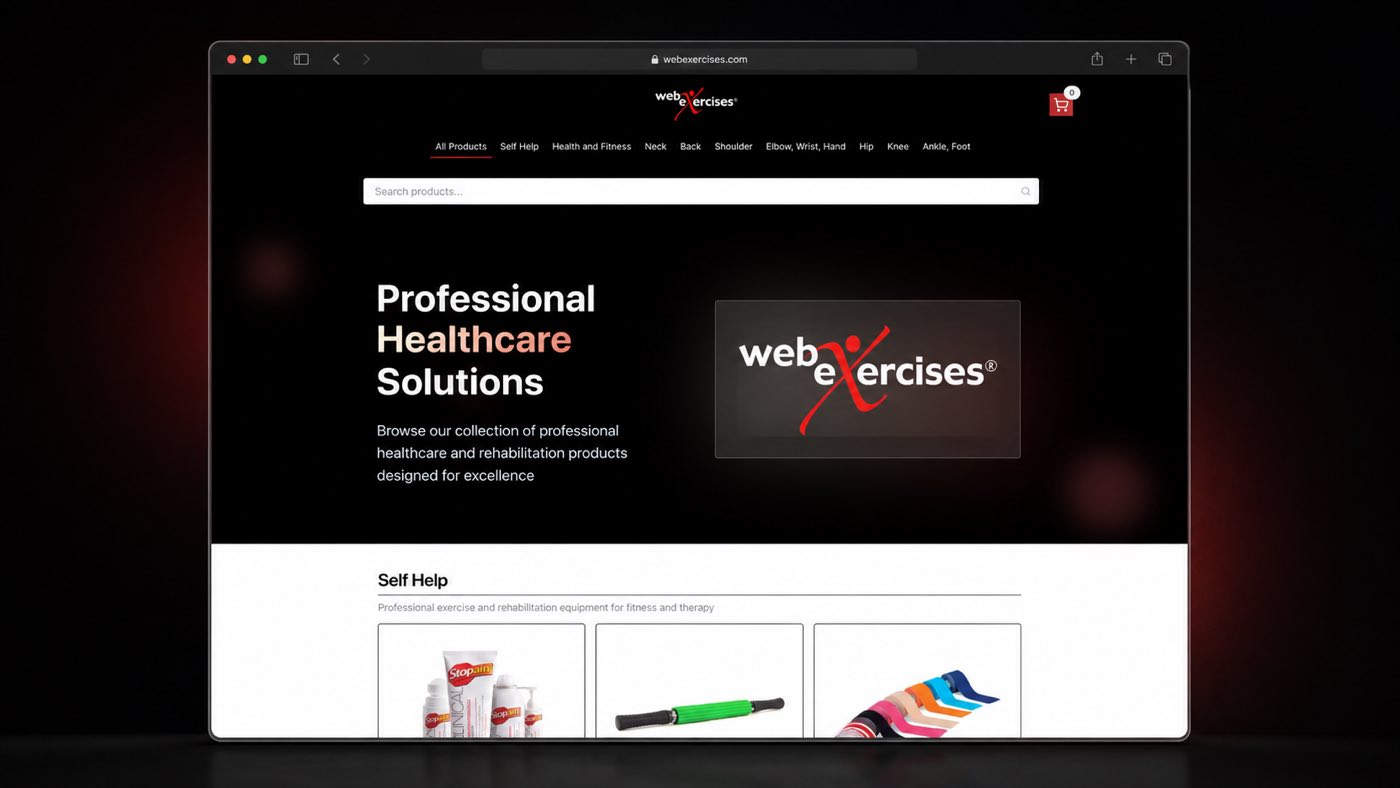
In detail
Project snapshot
Client: WebExercises / North Coast Medical
Role: Full-stack design engineer
Stack: Next.js App Router, React 19, TypeScript, React Query, Zustand, VSR API, hosted Stripe Checkout, Sentry, Plausible, Docker.
Problem
WebExercises needed a standalone storefront connected to North Coast product data, carts, checkout, and affiliate tracking. Its Prescribe & Earn model lets providers recommend rehab products and earn commissions. Provider links, patient shopping, attribution, and checkout needed to work together without exposing backend complexity.
Role and approach
I led greenfield design engineering through production hardening: architecture, browsing/cart design, API integration, bundles, attribution, checkout migration, observability, deployment, and merchandising audits. Affiliate attribution was product behavior affecting cart state and checkout metadata—not merely analytics.
Implementation
- Read affiliate_id from provider links, persisted attribution context, synchronized bundle/cart requests, reset stale context when another affiliate link opens, and attached affiliate metadata to cart lines and checkout requests.
- Bootstrapped RX-style bundles, avoided duplicates, and removed stale or unrelated items from the active bundle cart.
- Built category browsing, cards/detail pages, variant selection, images, badges, related items, affiliate-eligible search, shipping messaging, and quantity/removal controls.
- Used inventory data for purchasability, stock labels, order limits, and low-stock messaging. Single-variant products omit unnecessary selectors; unavailable products have disabled/coming-soon states.
- Reconciled stakeholder merchandising lists against backend availability and eligibility; added item exclusions and CSV audits for valid product pages.
- Replaced an initial Snipcart-style client cart with server-backed VSR cart sessions and hosted Stripe Checkout. Added typed V2 envelopes, persisted cart tokens, response normalization, repricing/validation, checkout URL/session fallbacks, and success/pending/cancel/failure handling.
- Successful payments initialize fresh carts; cancelled or failed payments retain reusable carts.
- Added manual checkout verification, Sentry with replay disabled, Plausible replacing SolarWinds RUM, and multi-stage Docker deployment with non-root runtime, healthchecks, and build hardening.
Delivered outcome and constraints
Delivered a new provider-recommended ecommerce channel with affiliate-aware links, bundle-aware cleanup, patient shopping, hosted checkout, monitoring, analytics, deployment hardening, and product audits. Evolving API responses, legacy product data, and coexistence of bundle/direct-shopping contexts remained constraints. No quantitative conversion, revenue, or commission results were reported.
Adapted from portfolio text; images and navigation omitted.