In detail
Make catalog changes inspectable
VSR operators needed authenticated tools for category hierarchies, ordering, images and product-meta maintenance. Routine changes should not require raw database access, but an interface also needs to make potentially destructive operations understandable.
I worked across UX, frontend implementation, backend integration, authentication, tests and scripts. The delivered control plane brings catalog operations into focused surfaces while the API contracts and migration work continue to evolve.
Navigate the hierarchy, not a pile of records
The category tree supports creation, deletion and drag-and-drop ordering. Reordering needed cursor and offset fixes as well as feedback: moving an item on screen is useful only if the underlying category order follows it.
Product-meta search and detail views expose category assignments and allow assigned categories to be removed. These are related operational tasks, but not interchangeable records or one generic editing form.
Put feedback around risky actions
Confirmations, toast feedback and tests provide guardrails around catalog changes. Empty-product-meta cleanup also has a dedicated script and tests, rather than being implied by a polished interface.
The goal is to make the operation and its state inspectable. The portfolio account does not supply operator research or measured error-reduction results, so these guardrails should not be presented as proof that mistakes stopped happening.
Treat images and order as operational state
Image upload and updated-image display connect the admin interface to VSR's API and Cloudflare Images workflows. Sorting controls and an order-audit page expose catalog ordering through reusable audit logic. These tools support maintenance alongside ordinary editing; they do not establish that the broader image or platform migration is complete.
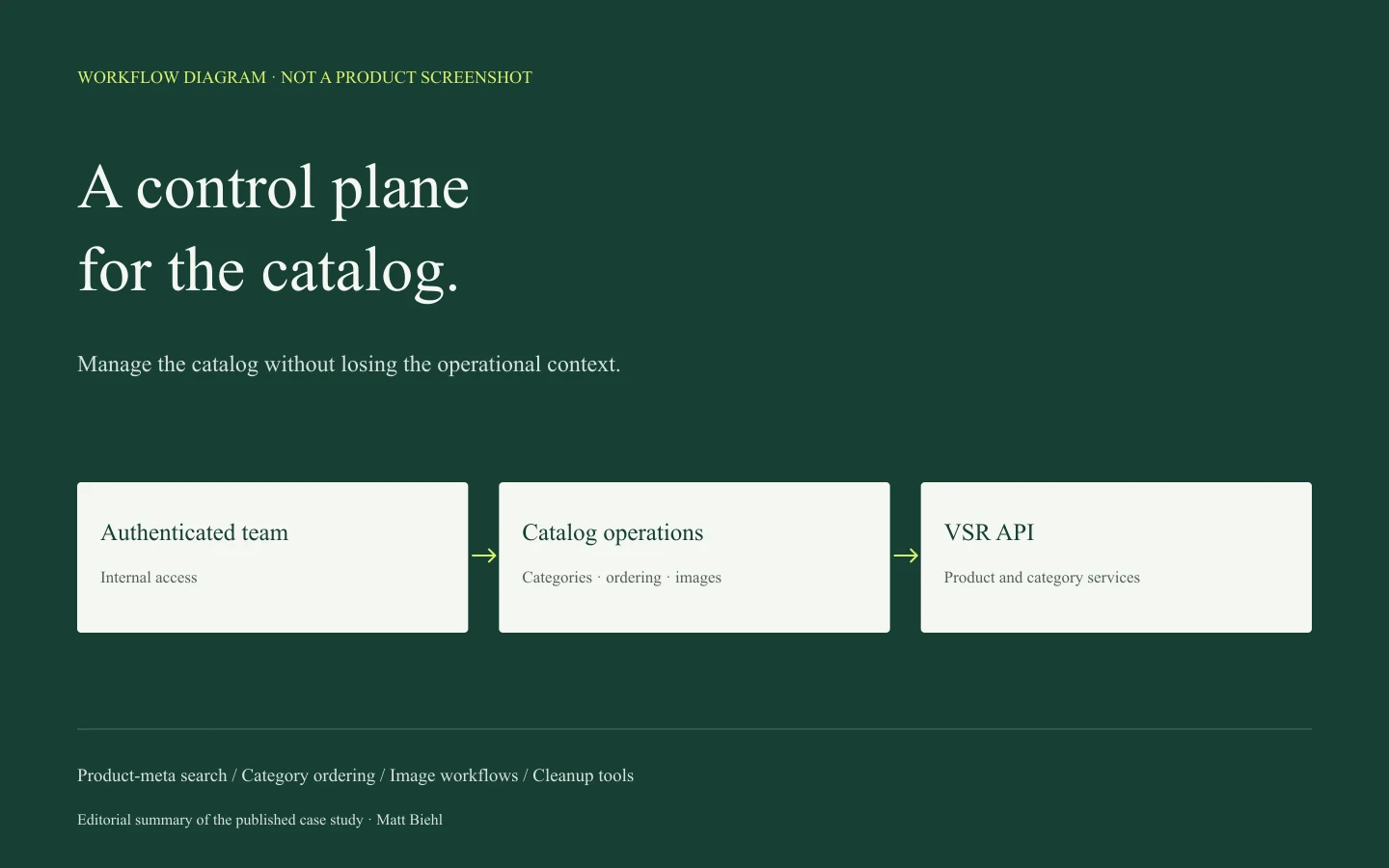
The retained catalog workflow diagram labels authenticated access, catalog operations and the API relationship. It is an editorial summary, not an admin screenshot or evidence of a usability test. No private interface was accessed or reconstructed for this story.

Delivery boundary
The published implementation account reports an authenticated catalog control plane with category trees, ordering, media, product-meta maintenance, cleanup and audits. Evolving API contracts and continuing migration remain constraints. Adoption, time saved and operational safety outcomes are not measured in the supplied evidence.
Under the surface
The application uses Next.js, React and TypeScript with PocketBase authentication, session restoration and cleanup, shared route shells and dnd-kit interactions. Vitest and Testing Library cover reported UI and helper behavior. The shared commerce API has its own contract and migration story; this page focuses on making those operations usable by internal teams.